The EU customs ID explained in plain language
At a glance
An EORI number (Economic Operators Registration and Identification) is a unique identification number that customs authorities in the EU use to identify businesses and individuals in customs procedures. You need one whenever you bring goods into the EU or ship them out. Without an EORI number, your shipment gets stuck in customs.
What do you need an EORI number for?
You need an EORI number whenever you take part in a customs procedure in the EU, most commonly as an importer or exporter named in a customs declaration. This also applies to transit procedures, customs warehousing, and entry or exit summary declarations.
If a customs broker or your customer lodges the declaration in their own name, their EORI number is used instead of yours. As soon as your business appears in the declaration itself, you need your own number.
Not sure whether you need an EORI number? Try our free EORI Check →
How is an EORI number structured?
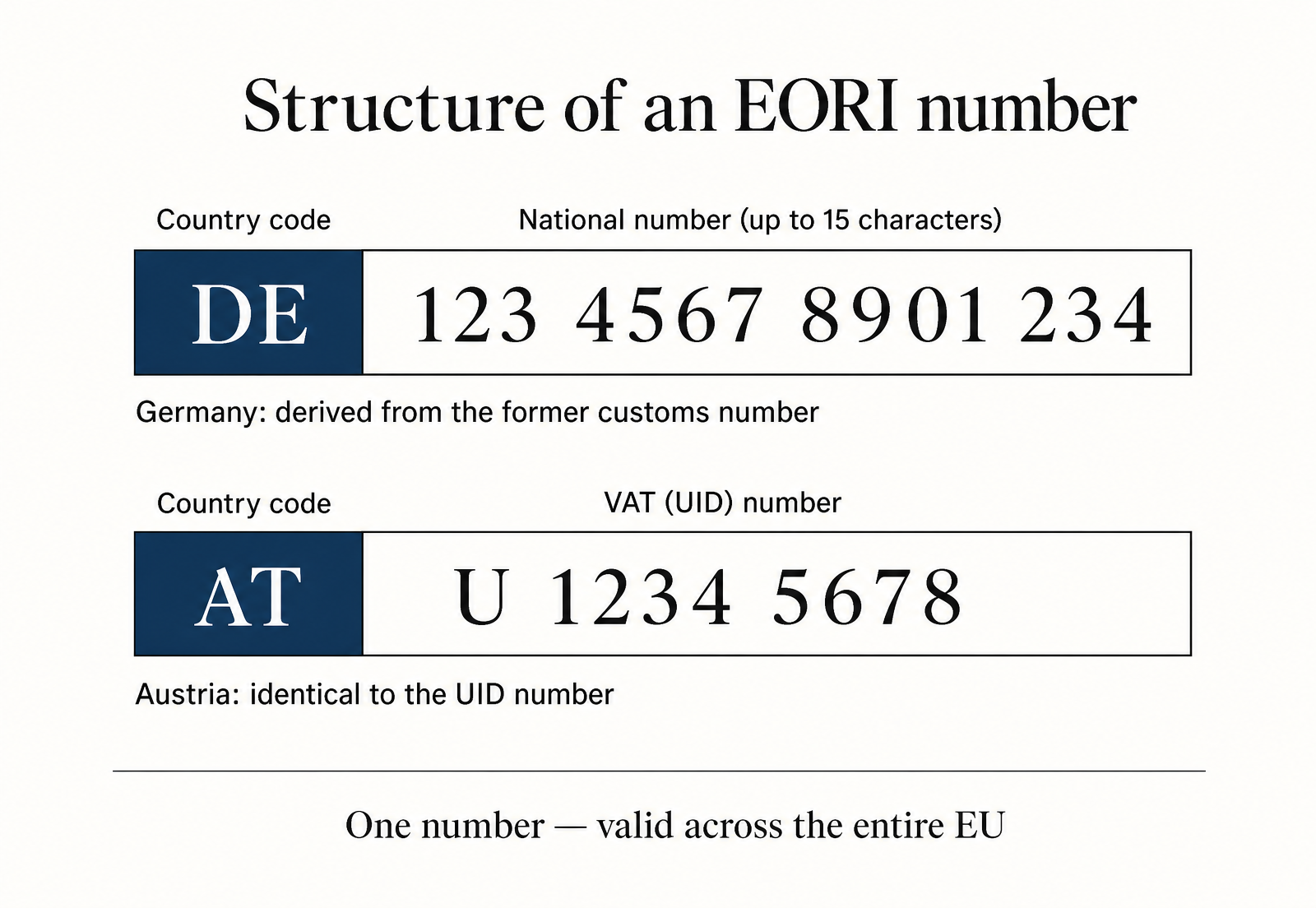
An EORI number always starts with the two-letter country code of the EU member state that issued it, followed by a national identifier. In Germany, for example, it consists of 'DE' plus up to 15 characters, usually derived from your former customs number. In some countries it is built from the national VAT number.
The number is valid across the entire EU. You only need one EORI number, no matter how many EU countries you trade with.
EORI number or VAT ID: What is the difference?
The two numbers are often confused, but they have different purposes. The VAT identification number (USt-IdNr.) is a tax number used for invoicing and VAT reporting within the EU. The EORI number is a customs identifier.
Registering for a VAT number does not automatically give you an EORI number. They are separate registrations, even if the EORI number sometimes contains the VAT number.
Who does not need an EORI number?
You generally do not need an EORI number if you only sell services, or if you trade goods exclusively within the EU's single market without crossing the EU's external border.
Private individuals also usually do not need one for occasional purchases. In individual member states there are exceptions for certain declarations. If you have any questions, please feel free to contact us.
Not sure whether you need an EORI number? Try our free EORI Check →
How do you apply for an EORI number?
You apply once, in the country where your business is established. In Germany the application is free and is filed with the customs administration via the customs portal (Zollportal). Processing typically takes a few days to a few weeks.
If your business is based outside the EU, you usually apply in the first EU member state where you lodge a customs declaration. Depending on your situation, you may also need a fiscal or customs representative.
How can you check an EORI number?
The European Commission provides a free online validation tool. Enter the number, and it tells you whether the EORI number is valid and active, useful for checking your own number or verifying a business partner.
Frequently asked questions
- Does an EORI number cost anything?
- No. In Germany and most other EU member states, applying for an EORI number is free of charge.
- How long is an EORI number valid?
- Indefinitely. Once issued, an EORI number remains valid until you deactivate it or your business closes. You do not need to renew it.
- Can I use one EORI number in every EU country?
- Yes. An EORI number issued in one member state is valid throughout the entire EU. You only ever need one.
- I am a sole trader, do I still need an EORI number?
- Yes, if you import or export goods in the name of your business. The obligation depends on the customs activity, not on the legal form of your business.
Not sure whether you need an EORI number? Try our free EORI Check →
Sources
This article provides general guidance, not legal advice. We are not lawyers. For binding information, please contact your national customs authority or a qualified adviser.